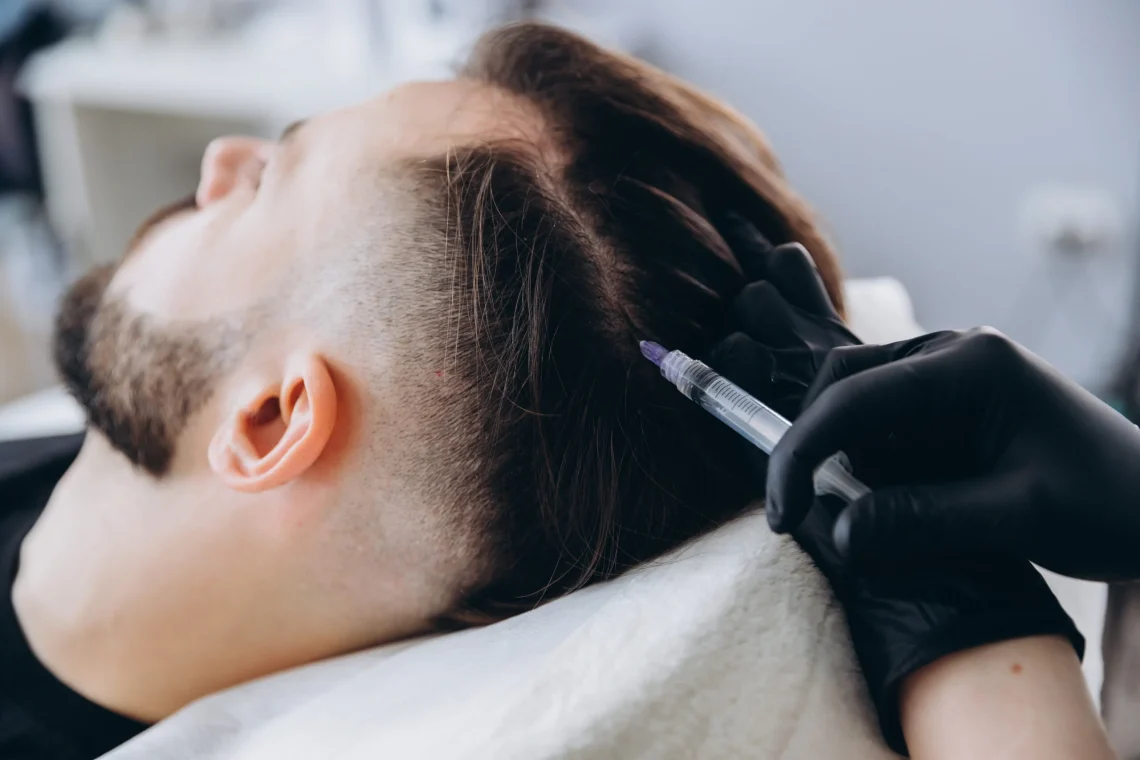
Understanding PRP: How Your Own Biology Can Fight Hair Loss
Understanding PRP: How Your Own Biology Can Fight Hair Loss
For decades, the battle against thinning hair was fought with chemical foams and synthetic medications. While these remain effective for many, 2026 has ushered in a “Biological Renaissance” in hair restoration. The centerpiece of this drtitoriaclinics.com movement is Platelet-Rich Plasma (PRP) therapy, a treatment that moves away from the pharmacy and looks inward, utilizing the healing power already flowing through your own veins.
What is PRP? The “Liquid Gold” of Dermatology
PRP is a concentrated source of autologous platelets found in your own blood. These platelets are best known for their role in clotting, but they are also “biological powerhouses” packed with growth factors. These factors are designed to signal the body to repair tissue, increase blood flow, and stimulate cell growth.
In a clinical setting, such as Dr. Titoria’s Clinics, the process is straightforward but scientifically rigorous:
-
The Draw: A small amount of the patient’s blood is taken (similar to a standard blood test).
-
The Centrifuge: The blood is placed in a high-speed centrifuge, which spins the sample to separate the red blood cells from the plasma.
-
The Concentration: The resulting “liquid gold”—the plasma containing 5 to 10 times the normal concentration of platelets—is collected.
-
The Delivery: This potent serum is then micro-injected into the scalp at the level of the hair follicles.
How It Works: Waking Up Dormant Follicles
Hair thinning usually occurs when the hair follicles begin to “miniaturize”—they shrink, produce thinner strands, and eventually stop producing hair altogether. PRP acts as a biological “reset button” through several mechanisms:
-
Neovascularization: PRP stimulates the formation of new blood vessels, improving the oxygen and nutrient supply to the scalp.
-
Prolonging the Anagen Phase: It signals the hair to stay in the “growth phase” longer, leading to thicker and longer hair strands.
-
Follicular Revival: For follicles that have become dormant but are not yet dead, the growth factors in PRP provide the necessary stimulation to begin producing hair again.
Why PRP is the 2026 Treatment of Choice
The popularity of PRP in modern dermatology clinics stems from its safety and versatility. Because the treatment uses the patient’s own blood, there is zero risk of an allergic reaction or rejection.
It is frequently used as:
-
Standalone Therapy: For patients in the early stages of thinning who want to avoid surgery.
-
Transplant Support: Surgeons often use PRP during and after hair transplants to ensure the newly moved follicles have the best possible environment to “take” and grow.
-
Post-Pregnancy Recovery: It is a highly effective solution for women experiencing “telogen effluvium” (excessive shedding) after childbirth.
Realistic Expectations
While PRP is revolutionary, it is not a “one-and-done” miracle. In 2026, the medical standard is a “Loading Phase” (usually 3 to 4 sessions spaced a month apart) followed by maintenance treatments every 6 to 12 months. Since hair grows slowly, visible results typically begin to manifest between the third and sixth month.
Conclusion
PRP therapy represents the ultimate fusion of nature and science. It acknowledges that the human body has an incredible capacity for regeneration if given the right tools. For those seeking a natural, low-risk, and scientifically-backed way to fight hair loss, PRP offers a chance to let your own biology do the heavy lifting. In the world of modern hair restoration, your own blood might just be the most powerful “medicine” you’ll ever use.
Anda Mungkin Suka Juga

Sinergi Rusunawa Pasar Rumput: Transparansi dan Pelayanan Prima Jadi Prioritas

Custom Die Cut Mylar Bags: Transforming Your Packaging Game